
Contents
AI vs Automation: What’s the Difference?
Introduction
In today’s tech-driven world, the terms Artificial Intelligence (AI) and Automation are often used interchangeably. However, they represent different technologies with distinct capabilities and purposes. Understanding their differences is key to navigating the future of work and innovation.
What is Automation?
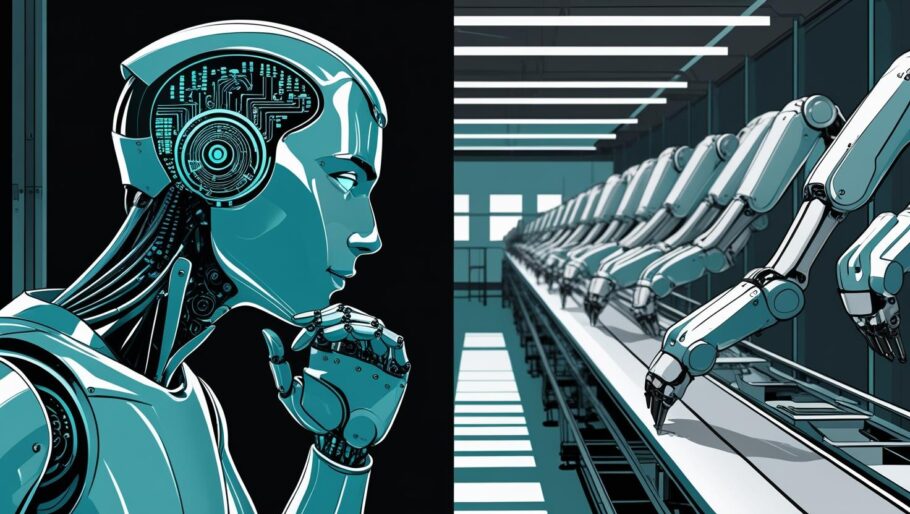
Automation refers to using technology to perform tasks with minimal human intervention. These tasks are usually rule-based and repetitive, such as data entry, manufacturing processes, or sending emails.
Example: A software that sends a welcome email to every new subscriber is automation. It follows a fixed set of instructions and doesn’t learn or adapt.
What is Artificial Intelligence?
Artificial Intelligence is a branch of computer science that enables machines to mimic human intelligence. AI systems can learn from data, make decisions, and improve over time without being explicitly programmed for every scenario.
Example: A chatbot that understands and responds to customer questions using natural language processing (NLP) is powered by AI.
Key Differences Between AI and Automation
- Purpose: Automation is designed to execute repetitive tasks. AI is designed to simulate human intelligence and decision-making.
- Adaptability: Automation is static and rule-based. AI is dynamic and can learn and adapt.
- Complexity: Automation handles simple, routine processes. AI deals with complex, unpredictable tasks.
- Technology: Automation uses scripts and logic trees. AI uses algorithms, machine learning, and deep learning.
Can AI and Automation Work Together?
Yes! In fact, combining AI with automation leads to what’s known as Intelligent Automation or Hyperautomation. This fusion allows businesses to automate more complex processes by adding decision-making and adaptability to traditional automation systems.
Applications in Real Life
- Automation: Invoice processing, auto-generated reports, scheduled social media posts
- AI: Personalized recommendations (Netflix, Amazon), fraud detection, virtual assistants (Alexa, Siri)
- Combined: AI-powered customer service chatbots that automatically handle user requests
Conclusion
While AI and automation are different, they complement each other in powerful ways. Automation boosts efficiency; AI brings intelligence. As these technologies evolve, understanding their roles can help you make smarter business and career decisions.